











Contractor updates and questions: info@acreageseptic.ca
FRFrançais
Rural septic service across Canada — choose your province
Search towns across Canada
Find yourSERVICE AREA

Local Septic Service For Rural Canada

Find the listed septic operator for 1,762 Canadian communities. Confirm services, travel area, timing and price directly by phone.

  • Operator details vary
  • Call for availability
  • Listed service-area contact
  • Confirm current pricing

Services to confirm

Common septic service requests

Operator capabilities differ. Confirm each required service directly with the listed operator.

Tank pumping

Confirm septic or holding-tank pump-out availability.

Confirm by phone

Inspections

Confirm real-estate or maintenance inspection availability.

Confirm by phone

Repairs

Describe the issue and confirm whether repair work is offered.

Confirm by phone

New systems

Confirm whether new or replacement systems are designed or installed.

Confirm by phone

How it works

From first call to booking

Step 1

Call or text

Share your location and describe the job you need.

Step 2

Confirm service and price

Ask whether the operator handles the job, travels to your location, and what the current price and timing are.

Step 3

Book directly

Book directly with the operator and confirm access instructions before the visit.

Service area

Choose your province

Browse 1,762 communities across 10 provinces, grouped by the listed service area. Confirm travel limits and availability by phone.

Featured guide

How Septic Systems Work and When to Call a Septic Professional

A practical homeowner article for rural Canada — useful whether you need routine pumping, a septic inspection, a repair, or help understanding how your system works.

Most rural homes in Canada that are not connected to municipal sewer rely on a septic system. A properly working system quietly handles wastewater every day, but when it is overdue for service or the field area is stressed, problems can show up quickly. Knowing the basics helps you recognize warning signs early, protect the property and book the right service with confidence.

How a septic system works

Wastewater leaves the home and enters the septic tank. Inside the tank, solids settle to the bottom as sludge, lighter material floats to the top as scum, and the liquid effluent stays in the middle. That liquid then flows to the next treatment stage — often a distribution box and drain field — where soil helps complete the treatment process. When the tank is too full, the field is overloaded or a component fails, the system is more likely to show symptoms.

That is why routine pumping and basic inspections matter. They help prevent solids from moving where they do not belong, help identify damaged lids or baffles, and give homeowners a better chance of catching trouble before it becomes a backup or field failure.

When to call for septic service

Many septic issues start with simple warning signs: slow drains, gurgling toilets, sewage odours, wet or soggy ground near the tank or drain field, unusually green grass, or a septic alarm. If wastewater backs up into the house, call right away. Even if the issue seems minor, early service is usually less expensive than waiting.

  • Septic pumping is usually needed every 2–3 years, though tank size, household size and water use habits can shorten or extend the interval.
  • Septic inspections are useful for routine maintenance, troubleshooting, and buying or selling a rural property.
  • Septic repairs may involve pumps, alarms, floats, lids, lines or other components when the system is not operating as it should.
  • Installations and replacements require local planning and approval, so it is important to confirm what applies to your property before work begins.

Simple maintenance habits that help

  • Keep a record of pump-outs, inspections and repair dates.
  • Do not drive or build over the tank or drain field.
  • Spread out heavy water use rather than sending large surges all at once.
  • Direct surface water away from the system and protect the field from compaction.
  • If you own a cabin or seasonal property, include the septic system in opening and closing routines.

If you are not sure what kind of service you need, start by finding your area and calling the listed operator. Describe the symptoms, confirm the company handles that job type, and ask about travel area, timing and current pricing. AcreageSeptic.ca is organized to make that first call easier for rural homeowners.

Tip: service details differ by operator. Always confirm availability, exact services, travel distance and current pricing directly by phone.
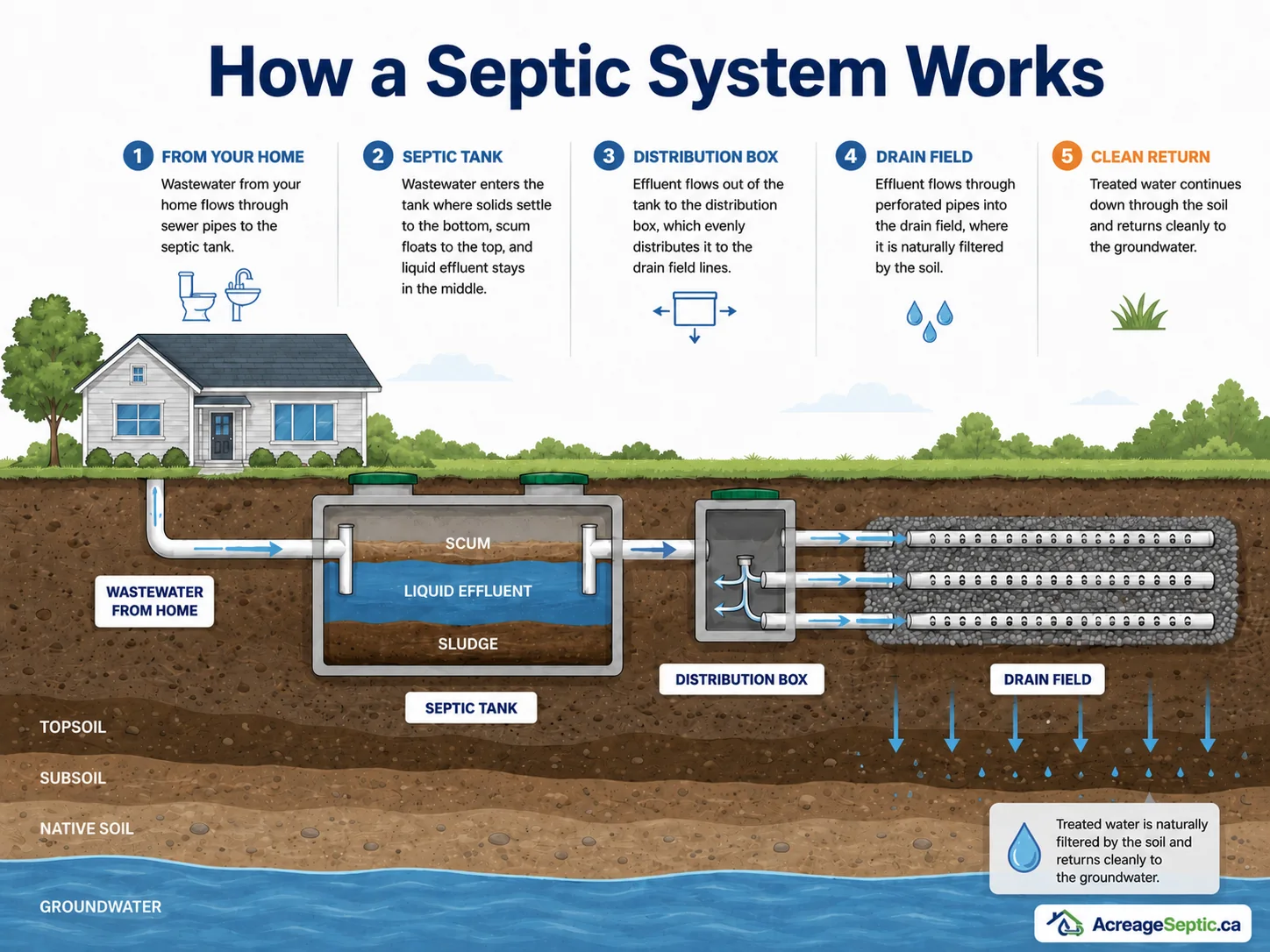
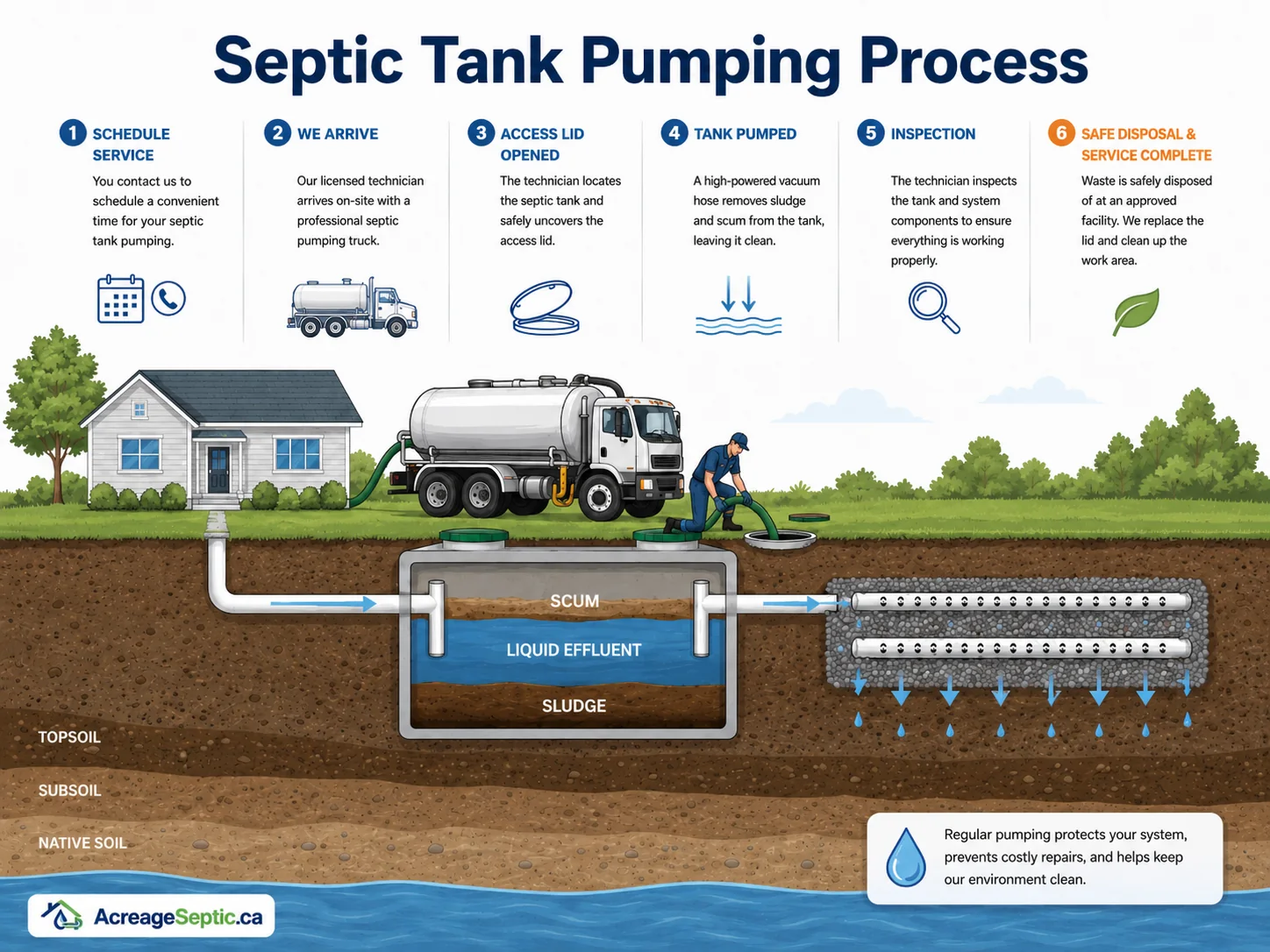
Diagram showing how wastewater flows from a home through a septic tank, distribution box and drain field.
A septic system moves wastewater from the home to the tank, then onward for final treatment through the field.
Quick reminder

Routine pumping and early attention to warning signs usually protect the drain field — one of the most important and costly parts of the whole system.

Verified customer feedback

Reviews for listed operators

AcreageSeptic should display only reviews matched to an operator’s exact business phone number.

Good to know

Septic questions, straight answers

How often should a septic tank be pumped in Canada?

Most rural households should pump every 2–3 years. Bigger families, smaller tanks or heavy water use can shorten that to 18–24 months. If you can't remember your last pump-out, it's time.

How much does septic pumping cost in rural Canada?

Pricing varies by operator, tank size, access and travel. Call the listed operator for a current quote.

What are the warning signs of a full tank?

Slow drains, gurgling toilets, sewage smell in the yard, or a strip of suspiciously green grass over the tank or field. Sewage backing up into the house means call right away.

Do you service acreages and cabins outside of town?

The listed operator is associated with this service-area service area. Confirm travel limits and availability by phone.

Need help with a septic issue?

Call the listed operator to confirm the job type, travel distance, schedule and current price before booking.

📍 Find your town
Septic contractors

Want to get on the list?

If you offer pumping, maintenance, inspections, repairs, installs, replacements, holding tanks, septic fields, or mounds, email your contact details and service areas. Include your approved, certified, or licensed installer status where local rules require it.

Business name
Services offered
Service area