
Across Alberta, many acreages, farms and country homes rely on septic systems for everyday wastewater treatment. A properly maintained system protects the home, reduces the risk of backup and helps avoid expensive excavation or replacement work. Because system design and site conditions vary, it is important to confirm service details directly with the operator who covers your area.
How septic systems work in Alberta
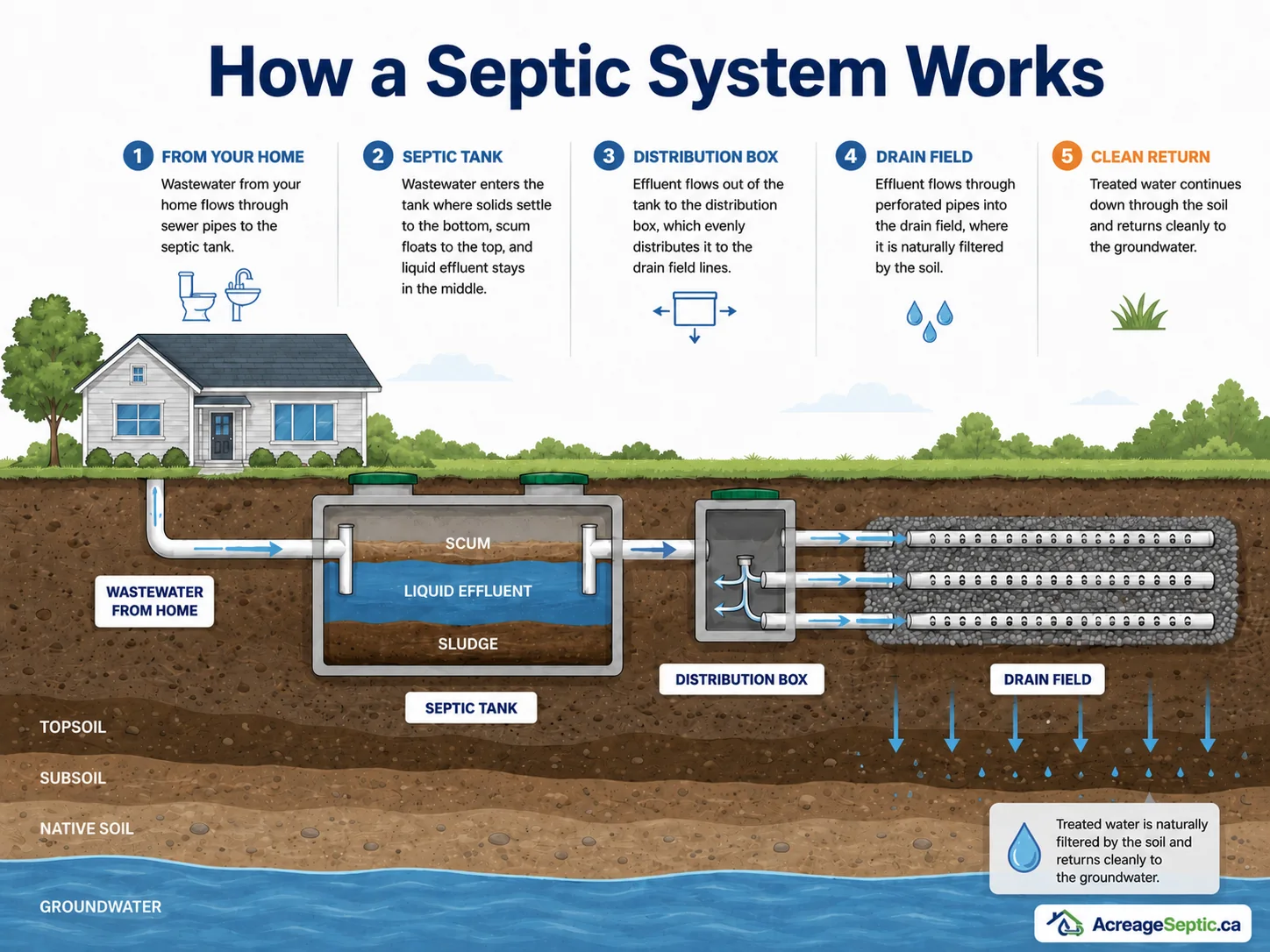
Most Alberta systems follow the same general pattern: wastewater flows from the house to a septic tank, solids settle, and the liquid effluent continues to a secondary treatment area such as a field or another approved component. In rural Alberta, winter conditions, water use habits and the condition of the drain field all affect long-term performance.
When to call for pumping, inspection or repair
If you notice slow drains, gurgling fixtures, standing water near the field, bad odours or an alarm on the system, book service promptly. Routine pumping and inspection can catch issues before they turn into a freeze-up, sewage backup or drain field problem.
Maintenance tips for Alberta homeowners
- Know where the tank and lids are located so service can be done quickly when needed.
- Spread out water use during the day to reduce overload on the system.
- Protect the drain field from heavy traffic, compaction and extra surface water.
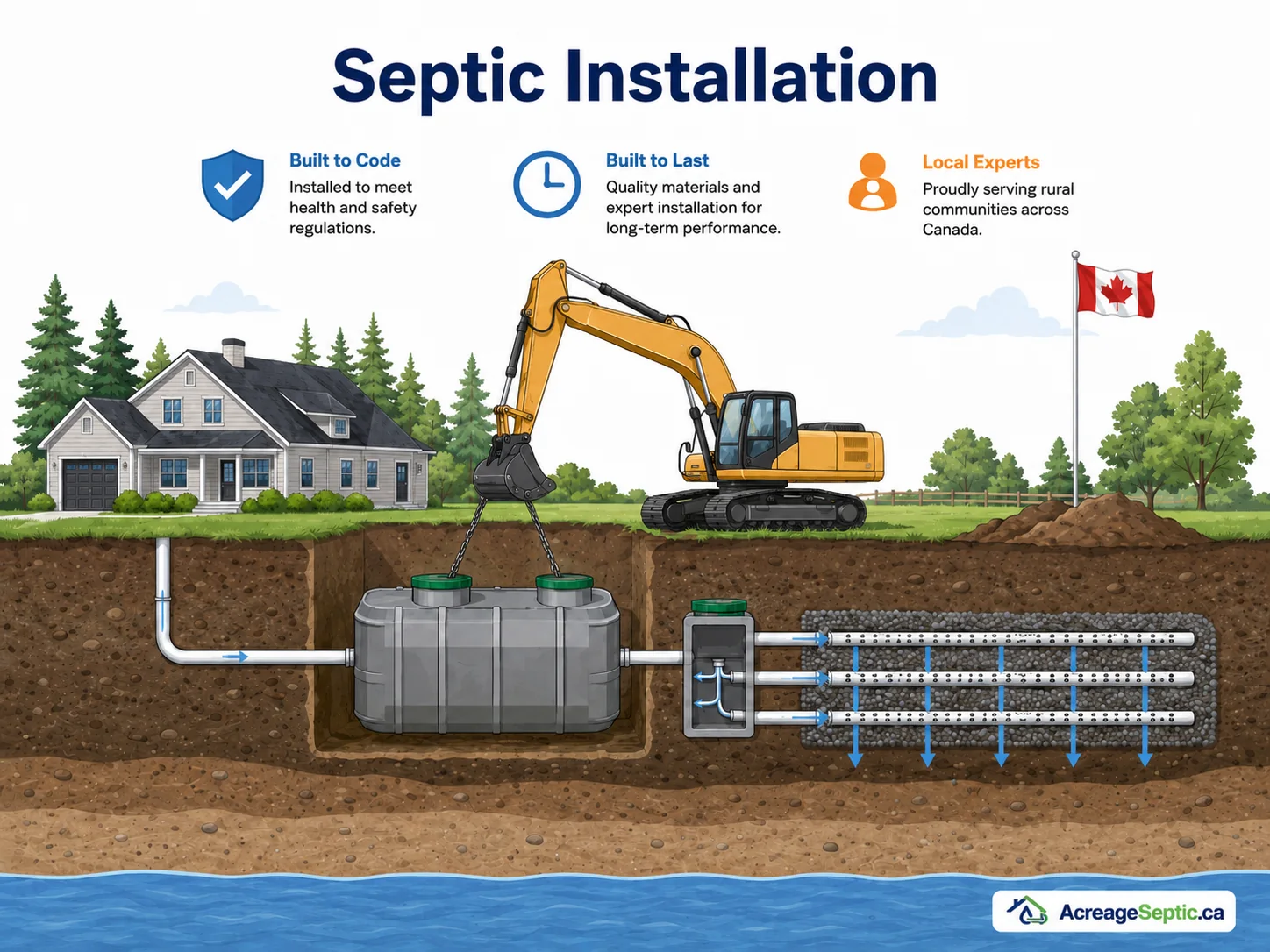
- Confirm installation, replacement or alteration requirements with your municipality before major work begins.
Use this Alberta page to locate your town and contact the operator listed for your territory. When you call, confirm whether the company handles pumping only, or also inspections, repairs, holding tanks, installations or emergency septic service.