


In New Brunswick, many homes outside larger centres rely on septic systems every day. A healthy system quietly manages wastewater in the background, but once problems start—slow drains, odours, soggy ground or backup—service is usually needed quickly. Regular pumping and inspections help catch problems before they become emergencies.
How septic systems work in New Brunswick
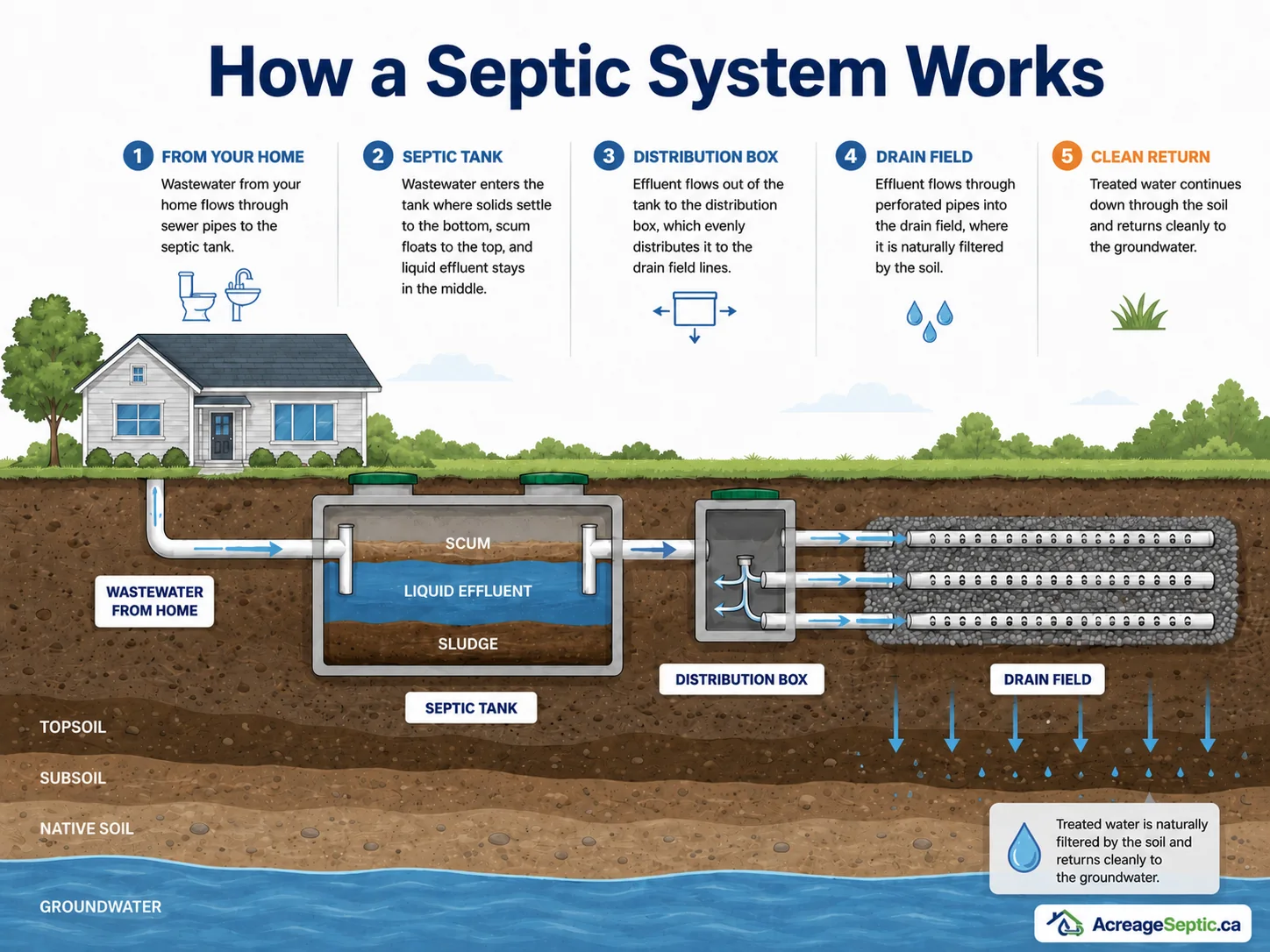
Wastewater first enters the septic tank, where solids and scum separate from the liquid portion. The liquid effluent then moves to the next treatment area, often a drain field. If the field becomes overloaded, compacted or too wet, performance can drop and the warning signs become noticeable around the property.
When to call for pumping, inspection or repair
Book service promptly when you see or smell early warning signs. The sooner a system is checked, the easier it is to identify whether the issue is overdue pumping, a component problem, excess water or something affecting the drain field.
Maintenance tips for New Brunswick homeowners
- Know the basic layout of the tank and field before you need emergency service.
- Keep rain runoff and drainage away from the field area whenever possible.
- Avoid harsh compaction from vehicles and keep trees and large shrubs at a safe distance.
- Confirm approval requirements before significant repair or replacement work.
Use the New Brunswick town list on this page to find the listed operator for your area, then confirm travel range, service timing and current pricing directly by phone.